
Many people who use drugs buy together and split it amongst themselves, which we refer to as "splitting & sharing".
While this is a common practice, restrictions related to splitting and sharing in overdose prevention services (OPS) or supervised consumption services (SCS) settings create barriers to accessibility and heighten risk for people accessing these service.
MEDIA ON SPLITTING & SHARING
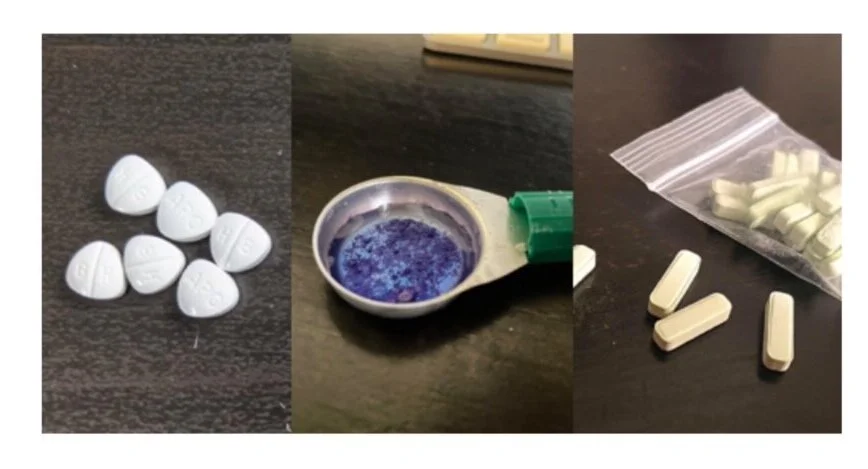
Splitting and sharing at overdose prevention and supervised consumption sites: What we learned
“Splitting and sharing implies acquiring, separating and/or transferring drugs between individuals, a common practice among people who use drugs. However, it is currently prohibited within federally exempted OPS/SCS settings. We wanted to know firsthand from people who use drugs and OPS/SCS operators the impacts of this restriction.”
To read full article check out the CATIE blog by clicking here.
BY NICK PINEAU, SANDRA KA HON CHU, COREY RANGER, MATTHEW BONN AND NATASHA TOUESNARD
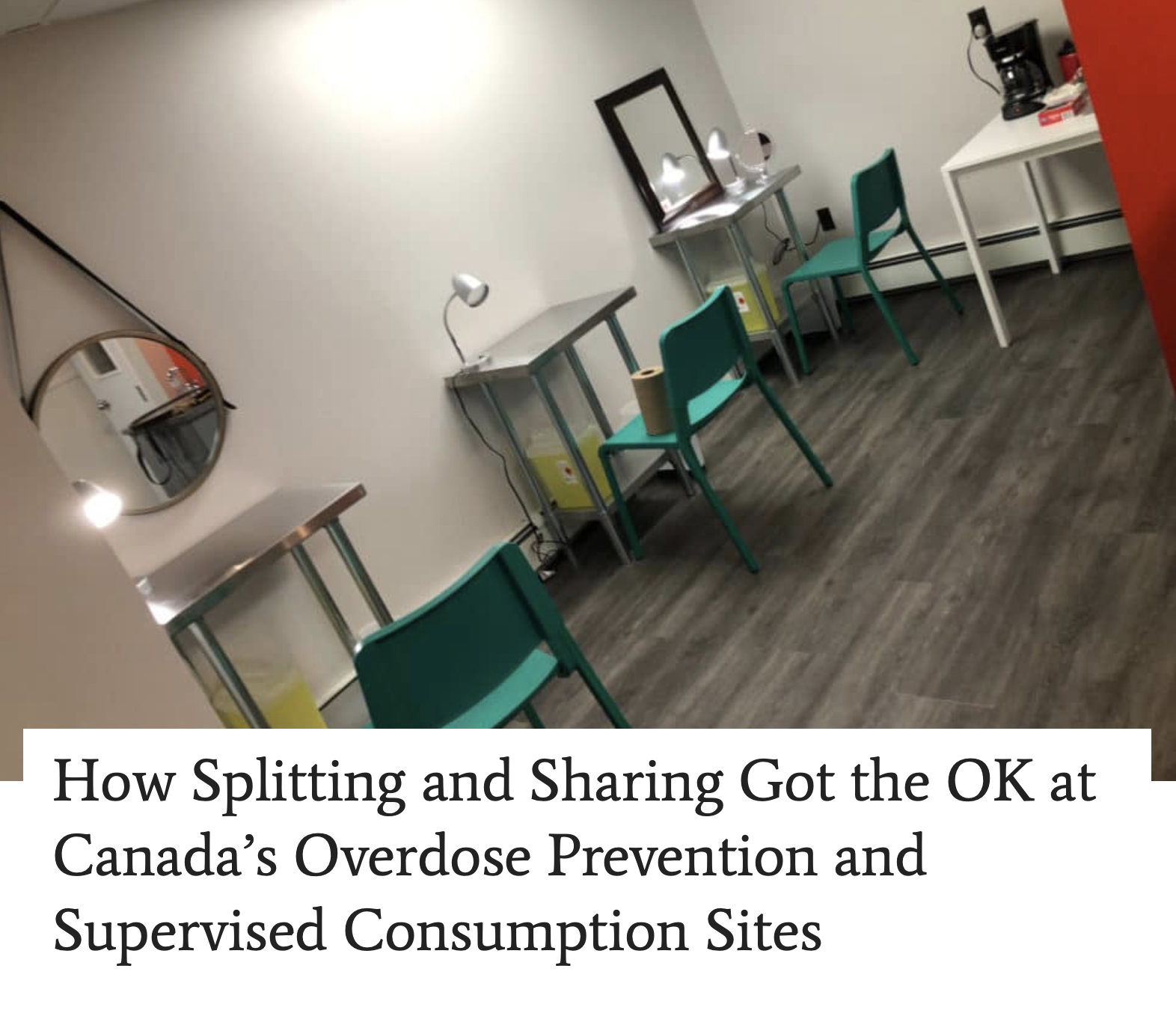
“I think splitting/sharing is an important part of drug culture,” said one. “If someone’s sick, they share. We are our community, and this piece is such a beautiful thread to cling to—in the horror of the overdose epidemic and COVID-19, please help foster this practice.”
To read full article check out the Filter-Mag article by clicking here.
BY NATASHA TOUESNARD, GILLIAN KOLLA, COREY RANGER, MATTHEW BONN AND PATRICK MCDOUGALL.
Section 56.1 Exemption for Medical Purposes under the Controlled Drugs and Substances Act for Activities at a Supervised Consumption Site
Office of Controlled Substances
Controlled Substances Directorate
Controlled Substances and Cannabis Branch
Health Canada
SPLITTING & SHARING IN OPS/SCS PROTOCOL TEMPLATE
Splitting and sharing inside an OPS/SCS prevents harms related to splitting and sharing outside of an OPS/SCS. Failure to allow splitting and sharing within exempted services increases risk for PWUD. Services that prohibit splitting and sharing experience scope creep when they have to police their own clients/participants. The results? PWUD are forced to split and share their drugs outside of the site, increasing the risk of experiencing discrimination, and criminalization. When arbitrary rules hinder accessibility to life saving services, the outcomes are fatal.
PREFERRED CITATION:
Ranger, Corey., Touesnard, Natasha., Bonn, Matthew., Brière-Charest, Kim., Wertheimer, Sophie., Kolla, Gillian., Ka Hon Chu, Sandra., Fong, Clem., Vanderschaeghe, Shay., Sinclair, Carole, & McDougall, Patrick. (2021). SPLITTING & SHARING IN OPS/SCS PROTOCOL TEMPLATE (5.0.0). Zenodo. https://doi.org/10.5281/zenodo.5111885
SPLITTING & SHARING IN OVERDOSE PREVENTION AND SUPERVISED CONSUMPTION SITES: Survey Results
Thank you to those who contributed to the development and interpretation of this survey: Corey Ranger, Natasha Touesnard, Matthew Bonn, Kim Brière-Charest, Sophie Wertheimer, Gillian Kolla, Sandra Ka Hon Chu, Clem Fong, and Patrick McDougall.
PREFERRED CITATION:
Ranger, C, Touesnard, N, Bonn, M, Brière-Charest, K, Wertheimer, S, Kolla, G, … McDougall, P. (2021, May 9). SPLITTING & SHARING IN OVERDOSE PREVENTION AND SUPERVISED CONSUMPTION SITES: Survey Results (Version 4.0.0). Zenodo. http://doi.org/10.5281/zenodo.4750269
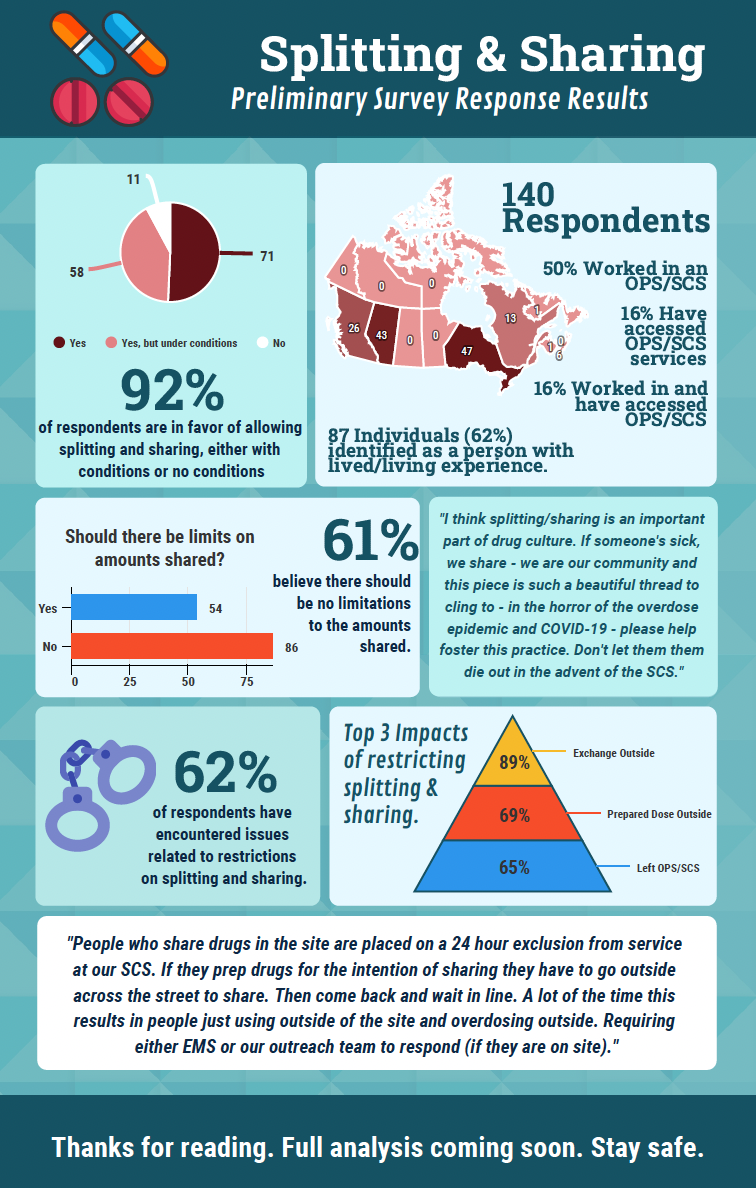
"I think splitting/sharing is an important
part of drug culture. If someone's sick,
we share - we are our community and
this piece is such a beautiful thread to
cling to - in the horror of the overdose
epidemic and COVID-19 - please help
foster this practice. Don't let them them
die out in the advent of the SCS."