
What I Learned From My First Injection Infection
This article was originally published by Filter, an online magazine covering drug use, drug policy and human rights through a harm reduction lens. Follow Filter on Facebook or Twitter, or sign up for its newsletter.
I had never really understood the difference between different kinds of infections. An infection was just an infection to me. Rick was the one who explained to me what cellulitis was. Bacteria gets into your bloodstream, transferred there from the surface of your skin during the injecting process—often when you don’t take the step of swabbing the injection site with alcohol. And cellulitis can lead to endocarditis.
“Rick quickly diagnosed me with cellulitis, a common bacterial skin infection, and wrote me a prescription for antibiotics.”
Endocarditis—a heart infection that can result from injection-related infections—is set to kill one out of every five people who inject opioids by 2030. It is under-researched, and overrepresented among the most marginalized drug users—the people who aren’t always able to wash their injection site before they hit, such as those without housing or regular access to showers.
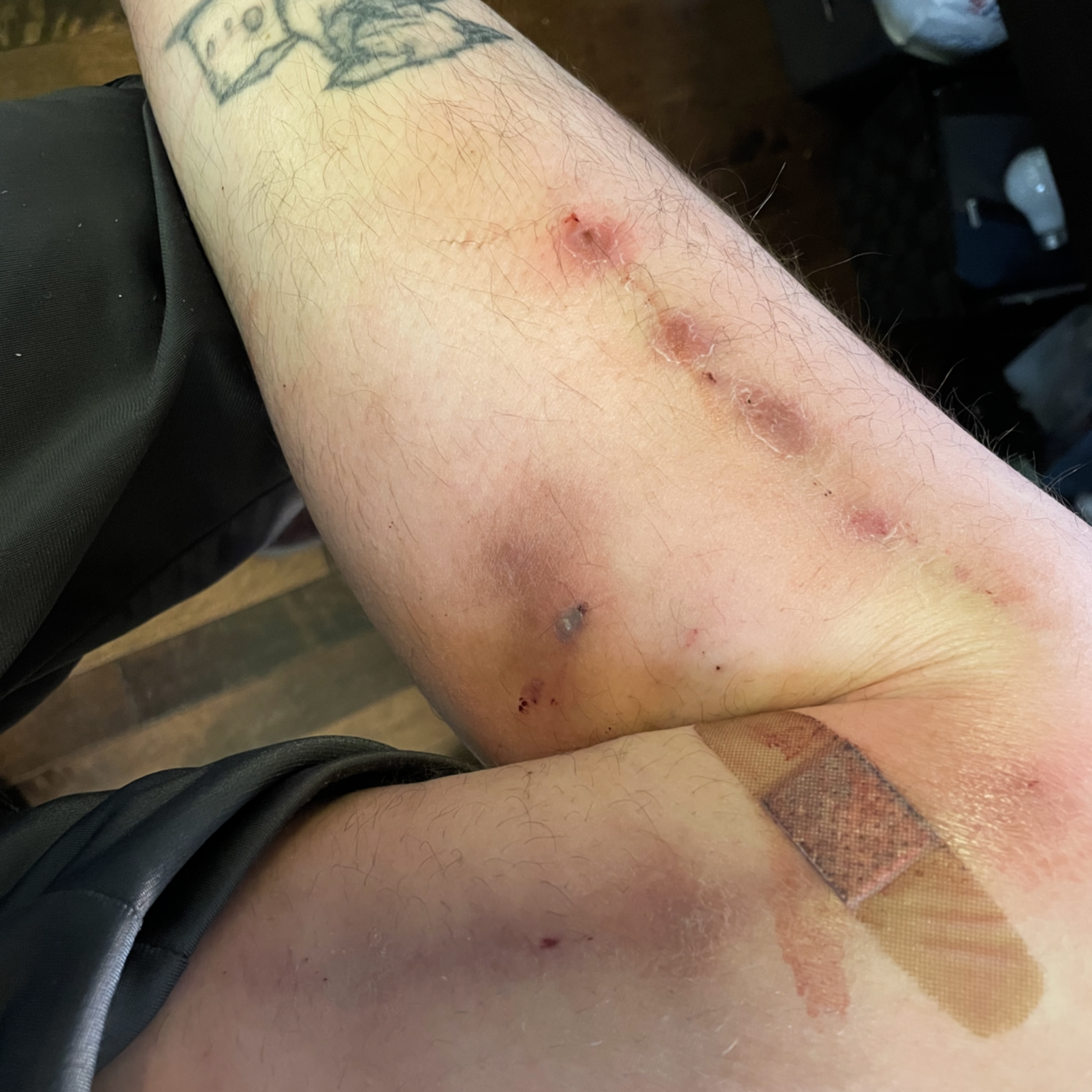
Photo by Matthew Bonn
Since my first cellulitis infection, I’ve had a few other close calls—bad misses on my feet, or open injection wounds not healing properly. MOSH has continued to provide me with helpful tips and tricks—asking me to feel the area in question to see if it was hot, or circle the area with a Sharpie to see whether it’s growing larger.
I’m still an injection drug user, just a bit safer and wiser now. We all benefit from practicing harm reduction techniques when using drugs—using sterile supplies every time, swabbing with alcohol prior to injecting, rotating veins to help avoid abscesses and infections.
Criminalization pushes drug users to the outskirts of society—places where hygiene products are as rare as brand new sterile syringes. We need people who use drugs—the experts in this field—to share their knowledge with those who haven’t had access to this knowledge, who will never be helped by traditional doctors who don’t practice harm reduction and won’t even explain in layman’s terms what’s going on. We need this education passed on so that everyone, from the most privileged to the most marginalized, stands half a chance at surviving—whether that means being saved from an overdose or from catching a potentially deadly infection.
Written by Matthew Bonn
Top photograph via City of Raleigh, North Carolina. Inset photograph by Matthew Bonn.